
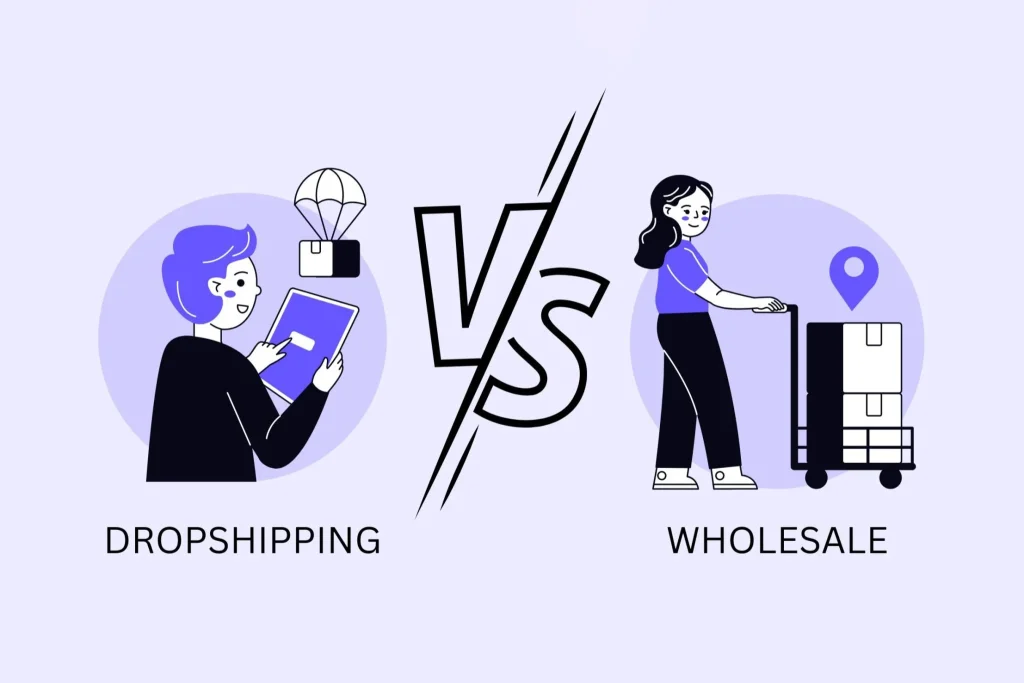
Dropshipping offers a low-risk entry where you don’t touch a single box, making it perfect for testing niches when ad costs are climbing. On the flip side, wholesaling unlocks those juicy 30-50% margins because you’re buying in bulk, but it demands you have the capital to handle stock control.
This decision splits into two distinct business models: Dropshipping vs Wholesaling.
This guide breaks down the real differences in costs, risks, profits, and operations. If you have under $2K, dropshipping is likely your lane.
If you’re funded and ready to build a serious brand, wholesaling is the move. Let’s figure out how to scale smart in 2026 without losing your shirt.
Key Takeaways
- Risk Profile: Dropshipping requires almost zero upfront capital for product, while wholesaling requires purchasing inventory (MOQs) before making a sale.
- Profit Reality: Wholesaling typically offers 30-50% margins compared to dropshipping’s 10-30%, but carries the risk of “dead stock.”
- Control: Wholesaling allows for custom branding and faster shipping; dropshipping leaves quality control and shipping speeds in the hands of the supplier.
- The Hybrid Path: Many successful sellers start dropshipping to validate a niche, then transition to wholesaling their best-sellers.
Understanding the Core Differences
If you are looking for a quick answer, the main difference lies in who holds the inventory and the risk. Dropshipping vs wholesaling isn’t just about shipping; it’s about financial structure.
Here is a breakdown of how the two models compare regarding the stuff that actually matters to your bank account:
Key Comparison Breakdown
| Aspect | Dropshipping | Wholesaling |
|---|---|---|
| Inventory | None—supplier ships direct to the customer | Bulk buy/store (MOQs), usually using a 3PL fulfillment service |
| Startup Costs | Low ($0-500 for store/ads) | High ($2K-$10K+ for inventory upfront) |
| Profit Margins | 10-30% (slim per unit) | 30-50%+ (access to bulk discounts) |
| Risk | Low—no risk of dead stock | Medium—you own the unsold inventory |
| Control | Low (relying on supplier quality/shipping) | High (custom unboxing, fast ship) |
| Scalability | Easy—add products instantly | Logistics-heavy (requires warehouse management) |
When you look at this table, the trade-off becomes clear. Dropshipping margins are lower because you are paying for the convenience of not holding stock. Wholesale profit margins are higher because you are taking on the risk of buying 500 units at once.
Why Choose Dropshipping: Low-Risk Launch for Beginners
Let’s be honest, if you are new to e-commerce, the idea of buying $5,000 worth of product that might not sell is terrifying. That is why dropshipping remains the go-to for beginners. It allows you to act like a nomad, running a business from a laptop without ever seeing a cardboard box.
The Low-Risk Appeal
You get to focus entirely on marketing. You can test 50+ different products to see what sticks without committing to any of them financially. If a product flops, you just delete it from your store. No harm done.
Quick Setup Steps
Setting up is ridiculously fast compared to traditional retail.
- Platform: You can launch a Shopify dropshipping store in a weekend.
- Apps: Tools like DSers or Spocket connect you to suppliers instantly.
- Niche Research: Use Google Trends to find what people want right now.
Dropshipping Pros and Cons
It’s not all sunshine and passive income, though. You need to know what you’re getting into.
- Pros:
- Minimal costs: You can start with almost nothing.
- Flexibility: Pivot your niche overnight if trends change.
- No storage: You never have to worry about warehouse fees.
- Cons:
- Thin margins: You need high volume to make real money.
- Supplier delays: You have zero control if shipping is slow.
- Competition: Low barrier to entry means everyone is doing it.
Wholesaling Advantages: High Margins and Brand Control
If you are tired of losing customers because your dropship supplier took 3 weeks to deliver a crumpled package, wholesaling e-commerce is the answer. This is “real” retail. You buy the product, you own it, and you control how it gets to the customer.
Bulk Profit Boost
When you buy in bulk, you negotiate MOQ (Minimum Order Quantities). Because you are buying 500 units instead of 1, your cost per unit drops dramatically. This is how you secure wholesale profit margins of 50% or more.
Creating a Brand Experience
This is where you build a business that can be sold later.
- Custom Packaging: You can put branded inserts and thank you cards in the box.
- Speed: By using a 3PL (Third Party Logistics) like ShipBob, you can offer 2-day shipping.
- Quality: You inspect the goods before they ship, so returns are lower.
Wholesaling Pros and Cons
This model feels more like a traditional business, which means it comes with traditional headaches.
- Pros:
- Quality control: You know exactly what the customer is getting.
- Branding: Stronger customer loyalty and higher Lifetime Value (LTV).
- Faster delivery: Compete with Amazon on speed.
- Cons:
- Upfront cash: You need capital for wholesale inventory management.
- Storage needs: You have to pay for warehousing.
- Dead stock risk: If trends change, you are stuck with the boxes.
Decision Framework: Match Model to Your Budget and Goals
Choosing between dropshipping vs wholesaling usually comes down to two things: your wallet and your risk tolerance. I usually tell my students to look at their bank account before looking at product ideas.
The Low Budget Path (<$2K)
If you have less than $2,000, dropshipping is your only safe bet.
- Use your limited funds for ads and content creation.
- Focus on e-commerce niche testing to find a winner.
- Accept lower margins in exchange for survival.
The High Budget Path (>$5K)
If you have capital, wholesaling builds a more sustainable asset.
- You can afford to brand your products immediately.
- You can buy inventory to secure better pricing.
- Focus on building a long-term brand rather than a quick cash grab.
The Hybrid Strategy
This is the smartest way to play the game in 2026.
- Start with dropshipping: Validate a product. Sell it for a month.
- Verify the data: If it sells consistently, you have a winner.
- Transition to wholesale: Contact the supplier, negotiate an MOQ, and brand it.
- Hybrid dropshipping wholesale: Keep dropshipping the risky items, and wholesale your bestsellers.
2026 Updates: Platforms, Suppliers, and Fixes
The game has changed a bit. You can’t just slap a product on a site and expect to retire. 2026 e-commerce trends are all about speed and automation.
Platform Wars: Shopify vs WooCommerce
For most people, Shopify dropshipping is still king because it connects to everything. However, if you are going the wholesale route, WooCommerce wholesaling gives you more control over inventory plugins without the monthly fees.
Fixing the Shipping Issue
“AliExpress delays suck”—we all know this. To fix it, you need Dropshipping suppliers 2026 that are local.
- Spocket/CJdropshipping: Look for their US/EU warehouses.
- Faire wholesale: Great for finding unique, high-quality brands to stock.
New Tools
- AI Inventory: Tools now predict when you will run out of stock so you don’t overbuy.
- Klaviyo: essential for email marketing to boost your Average Order Value (AOV).
Conclusion
At the end of the day, dropshipping is perfect for low-risk testing where you accept 10-30% margins to avoid buying boxes. Wholesaling delivers those sweet 30-50% profits and brand control, but it needs cash to feed the inventory beast.
My advice? Don’t be dogmatic. Use the hybrid path: validate via dropship, then scale your winners with inventory. Assess your budget honestly—start small, track your metrics, and be ready to pivot.
If you are looking for a partner to help with the logistics or supply side, Uniqbe is open for dropship programs to help you get started without the headache.
Ready to launch? Pick your suppliers, set up your store, and drive traffic for 2026 e-commerce success.
FAQs
1. What’s the average profit margin for dropshipping vs wholesaling in 2026?
Generally, dropshipping margins sit around 10-30%. Wholesale profit margins are typically higher, ranging from 30-50%+, largely because you are getting bulk pricing discounts.
2. Can I start dropshipping with no money?
Technically yes, but it’s hard. You can focus on organic traffic through TikTok or Reels. However, I always recommend having at least $100-200 for basic ad tests.
3. How to transition from dropshipping to wholesaling?
Identify your bestsellers first. Once you have a product selling 10+ units a day, contact suppliers to negotiate MOQ, bulk buy the item, and switch to a 3PL fulfillment center.
4. Shopify or WooCommerce for wholesaling?
WooCommerce wholesaling is great because there are free inventory plugins and no transaction fees. However, Shopify is easier to set up if you aren’t tech-savvy.
5. How to avoid slow shipping in dropshipping?
Avoid basic shipping lines. Use suppliers like Spocket or CJdropshipping that have US or EU warehouses to ensure fast shipping e-commerce standards are met.
 Hot Articles