

Dropshipping has completely flipped the script on how we think about selling online. Let’s be honest, holding inventory is a nightmare that stops most people before they even start. Who actually wants a garage full of cardboard boxes they might never sell?
In 2026, Shopify dropshipping is still one of the most accessible ways to start a business, but the game has changed. It’s no longer just about throwing up a store and hoping for the best; you need a real strategy. If you’re tired of seeing “get rich quick” schemes and want a practical, profit-first approach, you’re in the right place.
This guide is going to walk you through everything, from setting up your store to finding winning dropshipping products. We aren’t going to sugarcoat the hard parts, because knowing them is how you actually succeed. Let’s get to work and build something that actually makes money.
Understanding Shopify Dropshipping Fundamentals
What Is Shopify Dropshipping?
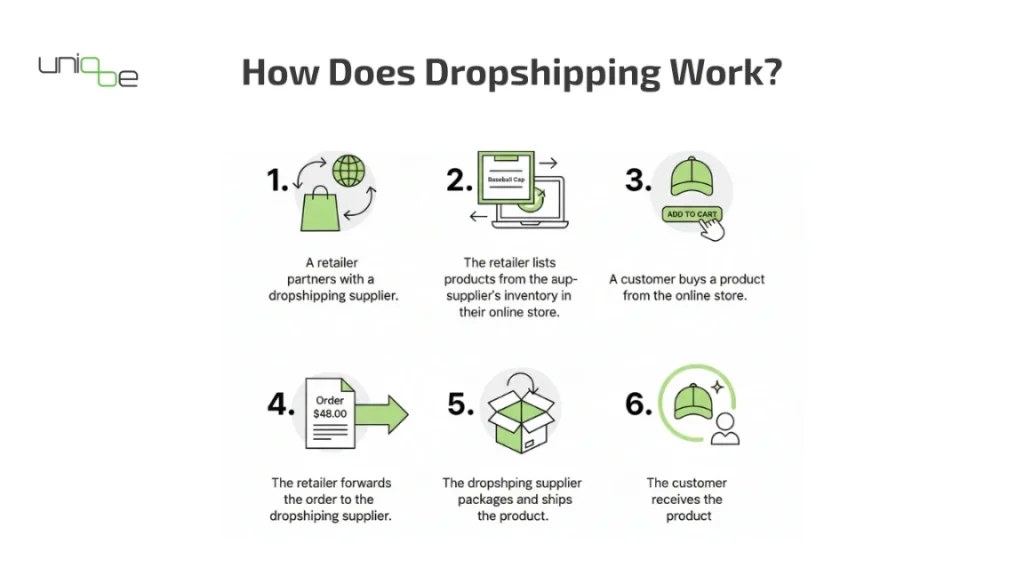
It feels kinda stupid to explain this if you already know it, but let’s make sure we are on the same page. The dropshipping business model is pretty simple: you act as the middleman between a customer and a supplier. You create a storefront, list products, and take orders, but you never actually touch the stuff.
When a customer buys something from you, your store automatically tells the supplier, and they ship it directly to the customer’s door. Think of Shopify as the landlord that gives you the building and the tools to run the shop.
Why is this the go-to for 2026? Because Shopify dropshipping removes the two biggest risks in retail: buying inventory upfront and renting warehouse space. You can run a global business from your kitchen table with just a laptop and a decent Wi-Fi connection.
Is Shopify Dropshipping Legal and Profitable?
I get asked this all the time: “Is this actually legal?” Yes, Shopify dropshipping is 100% legal, provided you aren’t selling counterfeit goods or prohibited items. You are simply a retailer using a specific fulfillment method, which is standard practice for major companies like Wayfair and even Home Depot.
But is it worth your time? Profitability metrics suggest that dropshipping models can be about 18.33% more profitable than traditional retail because you don’t have overhead costs dragging you down. However, you need to understand that revenue is not profit.
Your realistic profit margins usually sit between 15% and 20% after you pay for ads, the product, and Shopify fees. Success in 2026 comes down to your ability to keep marketing costs low while maintaining a high average order value.
Getting Started: Pre-Launch Planning
Step 1: Set Expectations, Budget, and Timeline
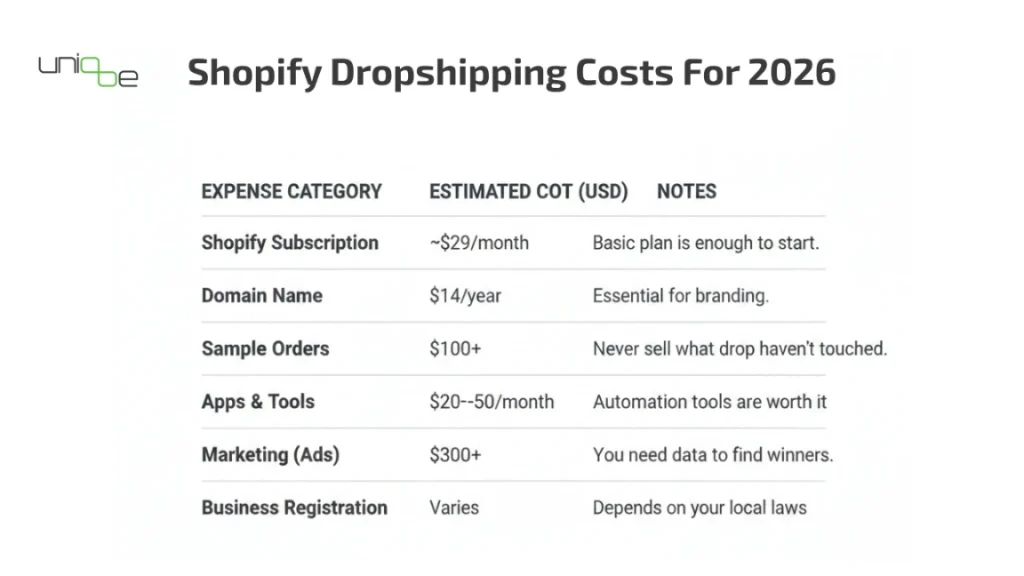
If anyone tells you you can start this with $0, they are lying to you. Starting a dropshipping business requires a small investment, and it’s better to know that now than to run out of cash two weeks in. I recommend a minimum budget of $500 to $1,000 to do this properly.
You need to treat this like a real job, not a lottery ticket. Expect to spend at least a month setting up, testing, and failing a few times before you see consistent sales.
Here is a realistic breakdown of Shopify dropshipping costs for 2026:
Step 2: Research and Choose Your Niche
This is where most people mess up—they try to sell everything to everyone. Dropshipping niche selection is the cornerstone of your success because you cannot compete with Amazon on general goods. You need to find a specific corner of the market where customers are passionate and willing to spend money.
Use tools like Ecomhunt or Dropship Spy to analyze winning dropshipping products and see what is trending. Look for products that solve a specific problem or cater to a specific hobby, like “eco-friendly hiking gear” rather than just “outdoor stuff.”
You want a niche that isn’t totally saturated but still has enough customer volume to make money. It’s a balancing act, but spending an extra week on research here saves you months of frustration later.
Step 3: Find and Vet Suppliers
In 2026, you have three main ways to connect with best dropshipping suppliers: Shopify Collective, third-party apps, or independent supplier contracts. Your supplier is your business partner; if they mess up, the customer blames you, not them.
You absolutely must have a strict supplier vetting process. Check their shipping times, their return policies, and their communication speed before you ever list their item.
It is critical to order samples to check the quality yourself. Regional suppliers dropshipping networks (suppliers located in the US or EU) are becoming much more popular than shipping from China because customers hate waiting two weeks.
Store Setup and Configuration
Step 4: Create Your Shopify Account
Getting the account set up is the easy part. Head over to Shopify, enter your email, and follow the prompts. Before you commit to a store name, check if the domain is actually available.
You can use Shopify’s business name generator if you’re stuck, but don’t overthink it too much. A clean, simple name that sounds like a brand is better than “Best-Deals-4-U.com.”
Once you are in, get familiar with the dashboard. Shopify store setup is intuitive, but there are a lot of buttons, so take an afternoon just clicking around to see where everything lives.
Step 5: Design Your Store for Conversions
You don’t need to be a graphic designer to have a good-looking store. Pick a free theme from the Shopify Theme Store that looks clean and works well on mobile phones. Remember, more than half of your traffic will probably come from mobile devices.
Keep your colors consistent and make sure your fonts are easy to read. Use high-quality images—Shopify has a free stock photo library called Burst if you need lifestyle shots.
The goal isn’t to win a design award; it’s to make the customer trust you enough to pull out their credit card. A messy store looks like a scam, so keep it professional.
Step 6: Optimize Essential Store Settings
This is the boring administrative stuff, but you have to do it. Go into your settings and set up your payment providers (Shopify Payments and PayPal are standard). You also need to configure your legal requirements, including your refund policy, privacy policy, and terms of service.
Shopify has templates for these legal pages, which saves you a ton of time. Just make sure you read them and fill in your specific details.
Don’t forget to set up your shipping zones and rates. If you mess this up, you might end up paying for shipping out of your own pocket, which kills your dropshipping profit margins.
Step 7: Import and Optimize Products
Please, for the love of coffee, do not just copy and paste the supplier’s description. Dropshipping product research usually gives you basic info, but supplier descriptions are often written in broken English and look terrible.
Write your own product titles and descriptions that focus on benefits, not just features. Use AI tools to help you write catchy copy if you’re not a writer.
Make sure to tag your products correctly so they show up in the right collections on your site. This helps with SEO and makes it easier for customers to find what they are looking for.
Connecting Suppliers and Apps
Popular Shopify Dropshipping Apps for 2026
The right apps act like your employees, handling the grunt work while you sleep. Here are a few Shopify dropshipping apps that are crushing it right now:
- Oberlo/DSers: Still the standard for AliExpress integration, great for beginners.
- Spocket dropshipping: Focuses on US and EU suppliers for faster shipping times.
- Printify: The go-to for print on demand dropshipping if you want to sell custom designs.
- AutoDS Shopify: excellent for automation, pricing monitoring, and finding products.
- Shopify Collective: A native way to connect with other Shopify brands and sell their products.
- Wholesale2B: Good for accessing a massive directory of wholesale dropshipping suppliers.
Integrating Apps with Your Store
Installing these apps usually takes just a few clicks from the Shopify App Store. Once installed, you need to link them to your product pages.
This integration is what allows for inventory management dropshipping to happen automatically. When a supplier runs out of a blue medium t-shirt, the app updates your store so you don’t sell an item that doesn’t exist.
Take the time to map your variants correctly. There is nothing more embarrassing than sending a customer a size small when they ordered a large because your settings were wrong.
Automation Strategies for Scalability
Automated Inventory Management
You cannot manually check stock levels every hour; you will go insane. Dropshipping automation tools sync your store with your supplier’s warehouse in real-time.
If a product goes out of stock or the price changes, your store updates instantly. This protects you from losing money on sudden price hikes or disappointing customers with backorders.
Setting this up early allows you to focus on marketing rather than spreadsheet management.
Automated Order Fulfillment
When you get an order, you shouldn’t have to manually type the customer’s address into a supplier’s website. Automated order fulfillment is a feature in most apps like AutoDS Shopify or Spocket.
With one click (or sometimes fully automatically), the order details are sent to the supplier, and the payment is processed. This is how one person can handle 100 orders a day without hiring a staff.
It minimizes human error, ensuring the package actually goes to 123 Main St, not 132 Main St.
Automated Shipment Tracking
Customers in 2026 expect to know where their package is every second. Apps like AfterShip can automatically pull the tracking number from the supplier and email it to your customer.
This creates a “branded tracking page” on your site, which looks professional and reduces those “Where is my stuff?” emails.
It builds trust and keeps your customer service workload manageable.
Automated Marketing Campaigns
You need to bring customers back to your store. Set up automated email flows for abandoned carts—this alone can recover 10-15% of lost sales.
Automated marketing campaigns can also send a “Thank You” discount code after a purchase to encourage a second buy.
Use tools that integrate with Facebook or TikTok pixels to automatically retarget people who viewed your products but didn’t buy.
Driving Traffic and Building Your Brand
Marketing Strategies That Work in 2026
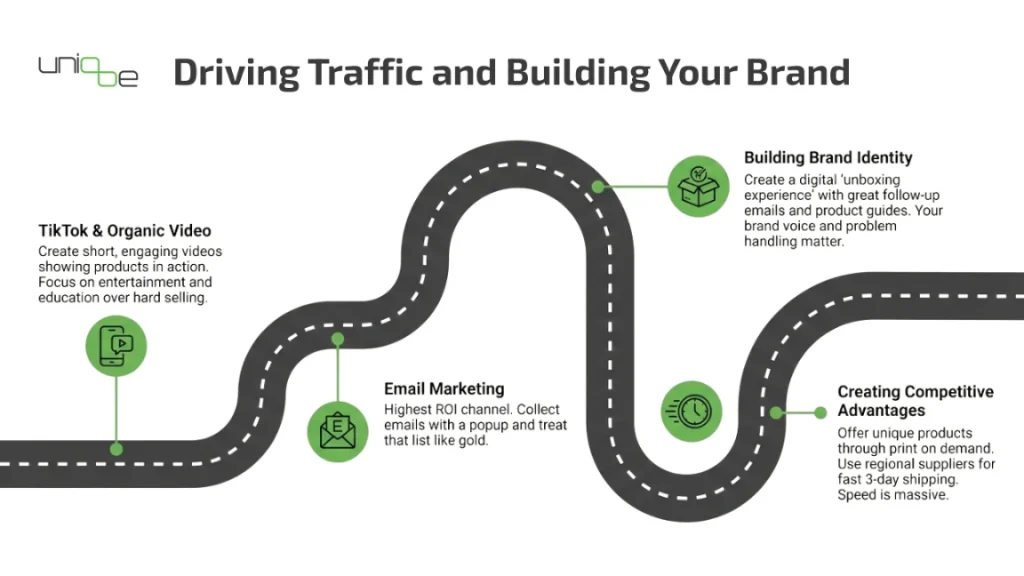
You can have the best store in the world, but if no one sees it, you’re broke. TikTok dropshipping and organic video content are massive right now because ads are getting expensive.
Focus on creating short, engaging videos that show your product in action. Dropshipping marketing strategies in 2026 are less about hard selling and more about entertainment and education.
Don’t ignore email marketing; it is still the highest ROI channel you own. Collect emails with a popup and treat that list like gold.
Building Brand Identity Despite Generic Packaging
This is the tricky part about dropshipping: the box usually looks boring. Branding in dropshipping happens on your website and in your customer service.
Create a “unboxing experience” digitally by sending great follow-up emails and guides on how to use the product.
Your brand voice, your logo, and how you handle problems are what separate you from a generic seller on Amazon.
Creating Competitive Advantages
Why should someone buy from you? Maybe you offer better support, or you curate a better selection.
Consider mixing dropshipping vs print on demand to offer unique products that no one else has.
You can also look for regional suppliers dropshipping to offer 3-day shipping when your competitors are offering 3-week shipping. Speed is a massive competitive advantage.
Optimizing for Success and Growth
Critical Success Factors
Success in this business isn’t about luck; it’s about consistency. Dropshipping scalability relies on your ability to read the data and pivot when necessary.
Customer service is your lifeline. Answer emails quickly, be polite, and solve problems faster than customers expect.
Treat your suppliers well. If you are doing good volume, you can sometimes negotiate better prices, improving your margins.
Balancing Consistency with Innovation
Don’t change your whole store every week. Stick to your core niche but test new dropshipping niche ideas occasionally.
It’s about finding a balance between what is working now and what might work next month.
Keep an eye on trends, but don’t bet the farm on a fidget spinner fad that dies in two weeks.
Scaling Your Dropshipping Business
Once you find a winning product, that is when you pour gas on the fire. Increase your ad budget slowly to maintain profitability.
Look into Wholesale dropshipping or private labeling once you have proven a product sells well.
Scaling means building systems so the business runs without you constantly turning the gears.
Common Challenges and Solutions
Challenge: Supplier Quality and Reliability
Sometimes suppliers send junk or ship late. It happens. The solution is rigorous dropshipping sample ordering and having backup suppliers ready.
Never rely on just one source for your best-selling product.
Challenge: Slim Profit Margins
Ads are expensive, and product costs are rising. Dropshipping profit margins can get squeezed tight.
The solution is to increase your Average Order Value (AOV) by bundling products or upselling at checkout.
Challenge: Verifying Supplier Legitimacy
There are scams out there. If a supplier asks for money via wire transfer only, run away.
Stick to verified platforms or use Shopify Collective to ensure you are dealing with real businesses.
Challenge: Customer Service Complexity
Returns are a pain in the neck with dropshipping. You often have to refund the customer before the supplier refunds you.
Have a clear policy and budget for “breakage”—sometimes it’s cheaper to just refund the customer and let them keep the item than to pay for return shipping.
Final Thoughts
Shopify dropshipping 2026 offers unprecedented accessibility for entrepreneurs—low startup costs, no inventory risk, and global reach from anywhere. However, success demands strategic thinking: thorough niche research, careful supplier selection, automation implementation, and relentless customer focus.
The businesses that thrive aren’t those rushing to launch; they’re the ones investing upfront in understanding their market, testing suppliers, and building systems. With proper planning, a reasonable budget of $500-$1,000, and commitment to continuous improvement, you can build a profitable, scalable dropshipping business that generates consistent income.
If you are looking for reliable partners to help you source products, companies like Uniqbe are open for dropship programs to help you get started with quality electronics. Start with research, validate your niche, automate wisely, and prioritize customer satisfaction over quick sales.
 Hot Articles