
Shopify offers full branding control and flexibility for custom stores, while Amazon delivers instant access to over 300 million shoppers via its massive marketplace.
Choosing between Shopify vs Amazon really hinges on your personal goals: do you want quick sales right now, or are you trying to build a long-term brand empire? It’s a tough choice because both have serious perks and some annoying downsides.
This guide breaks down the fees, traffic situations, fulfillment headaches, and dropshipping specifics to help you decide what’s best for your wallet.
Shopify vs Amazon: Key Differences Overview
When you strip away all the marketing noise, the core difference is simple: one is a house you build, and the other is a stall in a crowded market.
Shopify is a standalone store builder. You are renting the software to build your own website. You pick the paint, you choose the sign, and you own the keys. This means you get high customization and, most importantly, customer data ownership. You know who your customers are, their emails, and what they bought last Tuesday.
Amazon, on the other hand, is a marketplace. You are renting shelf space in the world’s busiest store. You get access to their foot traffic, but you have to play by their strict rules. You have limited branding options—your page looks just like your competitor’s page—and Amazon keeps the customer data, not you.
Here is a quick look at the fundamental split:
- Business Model: Monthly subscriptions (Shopify) vs. per-sale fees (Amazon takes up to 15% + FBA fees).
- Control: Total freedom on Shopify vs. strict guidelines on Amazon.
- Traffic: You bring your own traffic to Shopify; Amazon brings the people to you.
Costs and Pricing Breakdown
Let’s be honest, this is the part you care about most. If the math doesn’t work, the business doesn’t work. The cost structures for these two are totally different, and hidden fees can really sneak up on you.
Shopify Pricing Plans
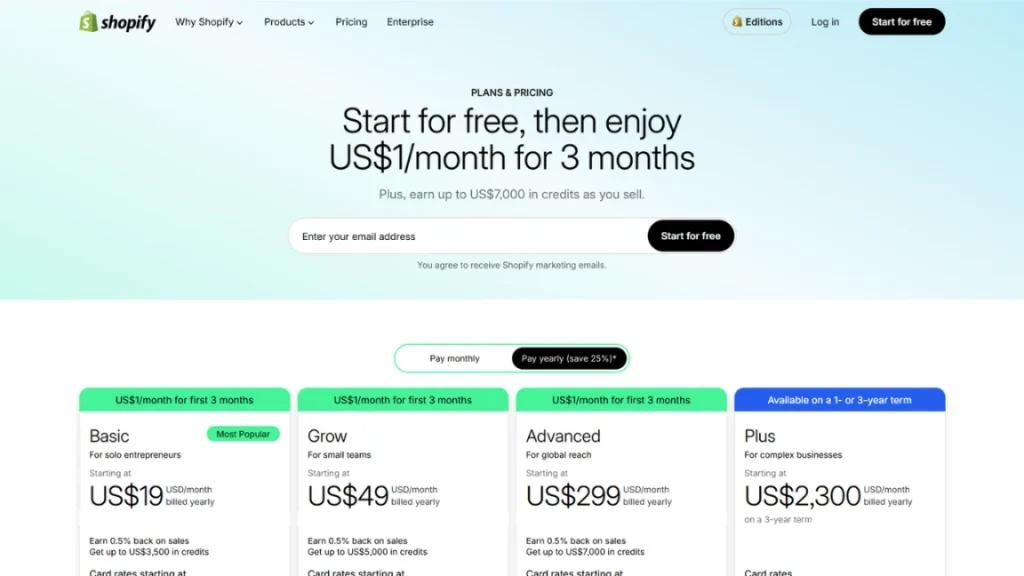
Shopify recently updated their pricing structures for 2026, and while it’s a monthly cost, it’s predictable.
- Basic: US$19/mo (on the annual promo). This is ideal for dropshipping starters because you get unlimited products and 2 staff accounts.
- Grow: US$49/mo (annual promo). This tier adds more staff accounts and better reporting features, which you’ll need once you start hitting $5k/month in sales.
- Advanced: US$299/mo (annual promo). This is for the big players needing custom checkout scripts and advanced scaling tools.
The transaction fees start at roughly 2% + a fixed fee, but these are usually waived or reduced if you use Shopify Payments. There are no referral cuts, meaning you don’t pay Shopify a commission just for selling a product.
Amazon Seller Fees
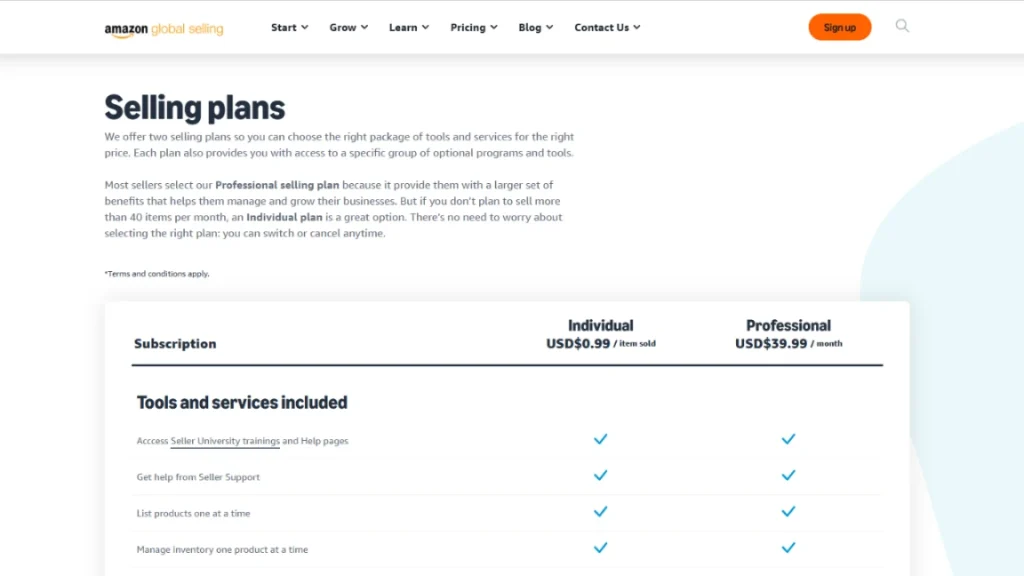
Amazon’s fees are a bit more complicated and can eat into your margins if you aren’t careful.
- Individual Plan: $0.99 per item sold. This is fine for low volume, but you get zero insights or advertising tools.
- Professional Plan: $39.99/mo flat fee. On top of this, you pay a referral fee (usually 8-15%) on every single sale.
- FBA Fees: If you use Fulfillment by Amazon, expect to pay anywhere from $3 to $10 per order for picking, packing, and shipping.
There are also hidden costs like long-term storage fees and returns processing. For many dropshippers, these returns can erode 30-50% of your expected margins.
Cost Verdict Table
It feels kinda stupid to guess without seeing the numbers side-by-side, so here is the breakdown:
| Aspect | Shopify | Amazon |
|---|---|---|
| Startup Cost | US$19/mo fixed (annual) | $0.99-$39.99 + per-sale fees |
| Profit Margins | 60%+ potential (you keep more) | ~30% after heavy fees |
| Marketing | Self-funded (expect ~$1k/mo) | Built-in traffic (organic) |
Traffic, Marketing & Customer Acquisition
This is where the biggest trade-off happens. You are either paying with your time (marketing) or your money (fees).
The Amazon Edge
Amazon has an undeniable advantage: 2.5 billion monthly visits. People go to Amazon with their credit cards already saved and ready to buy. If your product is listed there and has decent reviews, the Prime trust factor can boost your conversion rates to 20-30%. That is insane compared to a normal website. You don’t have to convince people Amazon is safe; they already know it is.
The Shopify Reality
On Shopify, you have zero built-in traffic. You launch your store, and it’s a ghost town until you do something about it. You have to excel with SEO, run TikTok ads, or build an email list. The average conversion rate for a decent Shopify store is around 4.29%. It takes work.
However, you can use Shopify apps to sync your products to Facebook, Instagram, and Google Shopping easily. On Amazon, you generally rely on Amazon PPC (Pay-Per-Click) to get your listings to the top of the search results, which is becoming more expensive every year.
Branding, Customization & Store Control
If you want to build a real asset that you can sell later, branding is everything.
On Shopify, you can choose from 100+ themes to make your store look exactly how you want. You can create blogs, About Us pages, and landing pages that tell your story. This builds a unique brand identity. When someone buys from you, they remember your store name, not just “I bought it on Shopify.”
On Amazon, your product is just a commodity. The listings are uniform. Sure, if you have a trademark, you can use Brand Registry to add a logo or a video, but it’s still Amazon’s playground.
The massive benefit of Shopify is that you own the customer emails. This allows you to market to them again and again. The lifetime value of a customer on your own site is often 3x higher because you can sell them a second or third product without paying for ads again. Amazon doesn’t give you that data.
Fulfillment & Dropshipping from Hong Kong
Since we are talking about sourcing from Hong Kong, logistics is the make-or-break factor for your business in 2026.
Amazon FBA
If you want to survive on Amazon, you usually need Fast Prime shipping (2-day). This means you generally cannot dropship directly from Hong Kong to the customer one by one because it’s too slow. You have to buy bulk inventory from your Hong Kong supplier and ship it to Amazon’s warehouses (FBA).
While Amazon has flexible policies regarding invoices, if you are dropshipping directly (FBM), you are walking a thin line. One late shipment from Hong Kong and your account could be suspended.
Buy Smartphone at Wholesale price
Shopify Fulfillment
Shopify is the dropshipping winner here. It integrates seamlessly with apps like DSers and CJdropshipping which are designed to connect with Hong Kong suppliers. You can use flexible 3PL (Third Party Logistics) if you want, but you don’t have to.
You can set expectations with your customers that shipping takes 7-12 days, and as long as you are transparent, people are okay with it. This allows for high flexibility and easy private labeling with that famous Hong Kong manufacturing quality.
Join Uniqbe to start dropshipping smartphone
Comparison Table
| Feature | Shopify | Amazon |
|---|---|---|
| Hong Kong Dropship | High flexibility (Direct to consumer) | Policy risks are high (Better to bulk ship) |
| Shipping Speed | Supplier-dependent (3-7d typical) | FBA: 2-5 days (Prime speed) |
| Inventory | None (true dropship model) | FBA storage fees apply |
Ease of Use, Support & Scaling
If you are not technically inclined, this matters.
For beginners, Amazon has a simpler setup in terms of just listing a product. You fill out a form, and you are live. Shopify requires you to build the “house” first—designing the homepage, setting up menus, etc. However, Shopify has an incredibly intuitive dashboard that makes managing orders very easy once you are set up.
When things go wrong (and they will), Shopify Support offers 24/7 chat and phone support. They are generally very helpful. Amazon support is notorious for being difficult; you are often stuck with automated forms or forums.
For scaling, Shopify is the beast. It is built for $10k+/mo brands. You can add unlimited apps, loyalty programs, and upsells. Amazon is great for revenue, but your scaling is capped by their fees and the fact that you don’t own the customer list.
Pros & Cons for Dropshipping 2026
Shopify Pros/Cons
- Pros: Total brand freedom, significantly high margins (you set the price), a massive app ecosystem (5000+ apps), and great multi-channel sync.
- Cons: You have to drive your own traffic (this is hard work), and the initial setup time takes longer.
Amazon Pros/Cons
- Pros: Access to a massive audience immediately, FBA automation handles shipping for you, and it allows for quick wins and cash flow.
- Cons: Fierce competition, random account suspensions, and you have absolutely no customer data to build a future business on.
Hybrid Strategy: Sell on Both
Why choose one when you can use both? Many successful sellers in 2026 are using a hybrid strategy.
You can use Shopify apps like Marketplace Connect to sync your inventory. The smartest strategy is to use Amazon to test products. Since the traffic is there, list a few items from your Hong Kong supplier. If they sell well, take those winners and build a branded Shopify store around them.
This way, you use Amazon for cash flow and discovery, and Shopify to build your long-term empire.
Conclusion
Shopify vs Amazon 2026 verdict: If you are serious about building a scalable brand where you keep 60%+ margins, you should choose Shopify for dropshipping from Hong Kong. Its flexibility allows you to navigate logistics without getting banned. However, if you just want to test the waters and want instant traffic, opt for Amazon, but be warned that fees will eat your profits and policy risks are real.
Many top sellers eventually hybridize both to hit that $100k+ revenue mark. Start with your goals: do you want quick cash (Amazon) or an empire (Shopify)? Integrate your Hong Kong suppliers today and start dominating.
FAQs
- Is Shopify or Amazon better for dropshipping beginners in 2026? Shopify is generally better for beginners who want control and low risk. Amazon offers fast traffic, but the policy hurdles for dropshipping can get your account banned quickly if you mess up.
- Can you dropship from Hong Kong on Amazon? Yes, but it is risky. You need to ensure flexible rules regarding shipping times are met. It is often safer to bulk ship to FBA rather than dropship individual items to avoid suspension.
- Shopify vs Amazon fees: Which saves more? Shopify’s fixed costs usually yield higher margins (60% vs 30%) in the long term because you aren’t paying a referral fee on every single sale.
- Does Shopify have built-in traffic like Amazon? No, Shopify has zero built-in traffic. However, with good SEO and ads, you can attract loyal customers that Amazon can’t match because you own the relationship.
- Can I sell on Shopify and Amazon simultaneously? Yes! You absolutely should. You can sync via apps for multi-channel growth, allowing you to capture Amazon’s volume while building your brand on Shopify.