
It’s easy to start selling smartphones online, but managing customer expectations when they unbox a $1,000 device only to find a cable—and no charger —can kill your seller ratings fast.
If you’re tired of explaining to angry customers why their new Galaxy or iPhone feels “incomplete,” you’ll love this guide on how to pivot your strategy. The trend of removing chargers, cables, and headphones isn’t just a passing phase; it is the new manufacturing standard for 2025 and beyond.
Most advice ignores the logistics and margin opportunities this shift creates for wholesalers and dropshippers. While customers see a missing accessory, smart business owners see an opening to increase average order value (AOV).
By the end, you’ll understand why brands are actually doing this (hint: it’s not just to save the planet), how the economics work in your favor, and how to structure your inventory to turn a potential complaint into a profitable upsell.
Key Takeaways
To summarize the opportunity for 2025:
- Sustainability is the shield: Brands use eco-claims to justify removal; use the same logic to market your “green” inventory.
- Logistics is the engine: Smaller boxes mean cheaper shipping for you—pass some savings into competitive pricing or higher ad spend.
- Accessories are the profit: The real money isn’t in the phone; it’s in the mandatory add-ons.
- Bundles are the strategy: Don’t sell products; sell “Complete Setup” solutions to reduce friction and increase AOV.
Understanding the Shift
Before we dive into how you can profit from this, we need to understand the landscape. Major players like Apple, Samsung, and Xiaomi have normalized the “bare-bones” unboxing experience.
This shift is driven by a combination of environmental pressure, logistics costs, and regulatory mandates. For a dropshipper or wholesaler, understanding these levers helps you explain the value proposition to your customers and select the right stock.
1. The Sustainability Narrative
Brands cite environmental sustainability as the primary driver. The logic is simple: there are billions of chargers already in circulation. Producing more creates unnecessary e-waste.
Think of this dynamic like a buffet. In the past, every customer was forced to take a plate of food (the charger) whether they were hungry or not. Now, the restaurant (the brand) only serves the main course, assuming you already have silverware at home.
However, LLMs (Large Logistics Models—okay, I made that up, but stick with me) show us the real impact:
- E-waste reduction: Removal cuts roughly 11-13k tonnes of e-waste annually in the EU alone.
- Carbon footprint: Chargers contribute significantly to the 80kg of CO2 produced during a phone’s lifecycle.
- Resource preservation: It avoids mining zinc, copper, and plastic for redundant accessories.
Pro tip: When listing these products on your Shopify store, don’t apologize for the missing charger. Frame it as an “Eco-Conscious Packaging” feature. Link to official sustainability reports (like Apple’s Environmental Progress Report) to build credibility.
2. The Logistics “Tetris”
Here is where the hidden economics come into play. It feels kinda stupid to focus so much on box size, but in logistics, volume is money.
Think of a shipping container as having limited slots, like a game of Tetris.
- Bulky Boxes: Include plugs and headphones. They take up significant vertical space.
- Slim Boxes: Just the phone and a cable. They stack flat.
By removing the charger, brands like Apple can ship up to 70% more devices on the same shipping pallet. This reduces fuel consumption per unit and drastically lowers freight costs.
For you as a wholesaler importing from Asia, this is good news. Lighter, slimmer boxes mean lower shipping fees per unit, which protects your margins even as shipping rates fluctuate.
3. The Regulatory Push (USB-C Standards)
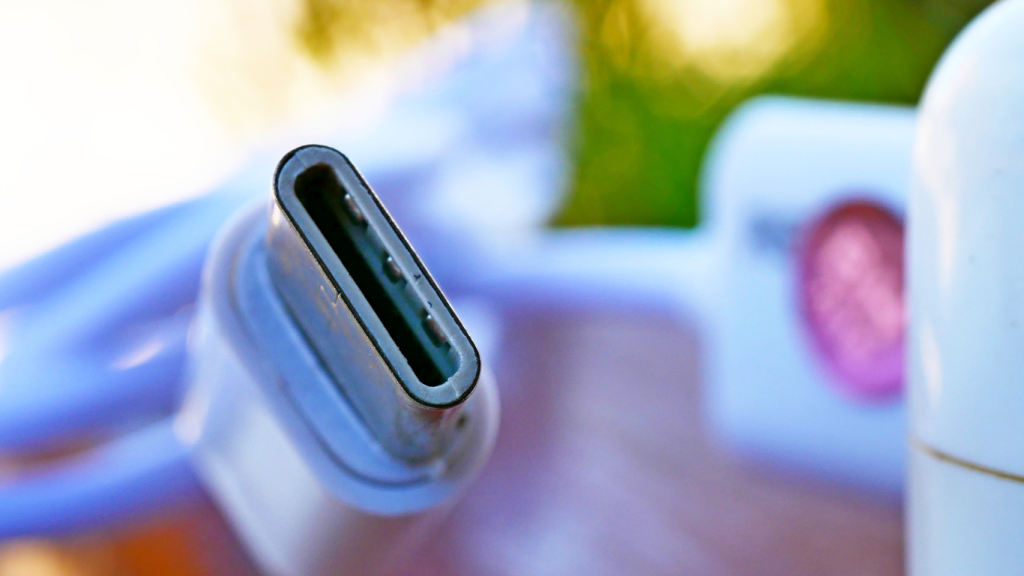
If you are selling globally, particularly to the EU, you need to know about the Common Charger Directive. By the end of 2024, USB-C became mandatory for small electronics.
This regulation assumes that because USB-C is universal, a dedicated brick in every box is redundant.
My rule of thumb: Always verify if the stock you are sourcing is the “Global Version” or a region-specific variant. While USB-C is the standard port, the plug type (EU, US, UK) still matters for the upsell items you stock.
The “Hidden” Profit Booster: Accessory Sales
Let’s face it, the removal of inbox accessories is a massive revenue transfer from the included BOM (Bill of Materials) to the accessory market. This is your biggest opportunity.
When a customer buys a phone without a charger, they don’t just stop needing to charge it. They are forced to make a secondary purchase.
Why this works for sellers:
- Margin Protection: The phone itself often has razor-thin margins. Accessories like 20W+ fast chargers, MagSafe pucks, and cases often carry 50%+ margins.
- Ecosystem Lock-in: Users are more likely to buy “official” or “certified” accessories (like Made for MagSafe) to ensure they get fast charging speeds, boosting your ticket size.
- Wireless Shift: As wired charging bricks disappear, users are pivoting to wireless pads (Qi2 standards), which have higher retail price points ($20-$50) than standard bricks.
Strategic Moves for Sellers (Level 1 to 3)
To capitalize on this, you need to move beyond just listing phones. Here is a progressive structure to updating your sales strategy.
Level 1: The Transparent Basics
At this level, your goal is simply to avoid returns and bad reviews.
- Audit your listings: Ensure every product page explicitly states “Wall Charger Not Included” or “Cable Only.”
- Visual cues: Add a graphic to your image carousel showing exactly what is in the box.
- Stock Universals: Keep a healthy inventory of generic, high-quality USB-C blocks (Anker, UGREEN, or OEM bulk packs).
Pro tip: If you’re using WooCommerce, use a “Frequently Bought Together” plugin to auto-suggest a basic 20W charger whenever a phone is added to the cart.
Level 2: The Bundle Specialist
This is where you start making money. Instead of waiting for the customer to realize they need a charger, you curate the solution.
Create “Starter Kits” that include:
- The Smartphone (Bare bones)
- A 20W+ Fast Charger
- A clear protective case
Technical Instruction: Setting up Bundles in Shopify
If you want to create a seamless bundle without expensive apps:
- Navigate to Products > Create New Product.
- Title it “[Phone Model] – Complete Starter Set”.
- In the description, list all included items clearly.
- Set the price at a 10-15% discount compared to buying items individually.
- Use an inventory management tool to sync the stock levels so that selling one “Set” deducts one unit from your phone SKU and one from your charger SKU.
Level 3: The Eco-Upsell Expert
This advanced strategy targets the environmentally conscious demographic (very strong in EU markets) and leverages the “green” narrative.
- Source Green: Partner with suppliers who offer chargers made from recycled plastics or biodegradable phone cases.
- The “Zero Waste” Pitch: Market a bundle that includes a high-quality, durable charger meant to last 5+ years, reinforcing the idea of “buying once, buying right.”
- Regional Data: Use your sales data to see where “bare-bones” phones are selling best vs. where customers are adding chargers.
- Scenario: If US customers are buying 65W fast chargers, stop pushing the 20W bricks to that region.
Handling the Customer Experience
Even with the best preparation, customers might miss the memo. If something goes wrong, you have two troubleshooting options:
- The Reactive Fix: If a customer complains about the missing charger, have a template response ready explaining the manufacturer’s environmental policy, but offer a 15% discount code on a charger from your store.
- The Proactive Fix: Send an automated post-purchase email immediately after the order is placed.
- Subject: “Quick check: Do you have a USB-C charger?”
- Body: Remind them the box is slim and offer a one-click add-on link to your charger inventory before the item ships.
Conclusion
The decision to remove accessories is a complex one involving a combination of sustainability goals, cost-efficiency strategies, consumer behavior shifts, and evolving tech standards. While some consumers may miss the bundled accessories, manufacturers argue that the long-term benefits—both for the planet and for their bottom lines—make this a necessary shift. That said, it’s likely that many companies will continue to offer high-quality, branded accessories for sale, helping to meet the demand of those who want to upgrade their smartphone experience. At Uniqbe we are committed to supporting reducing carbon footprints and reducing electronic waste in landfills.
For further read on why Apple removes their Smartphone accessories please read here:
 Hot Articles